Email Generator vs Mail Forwarding
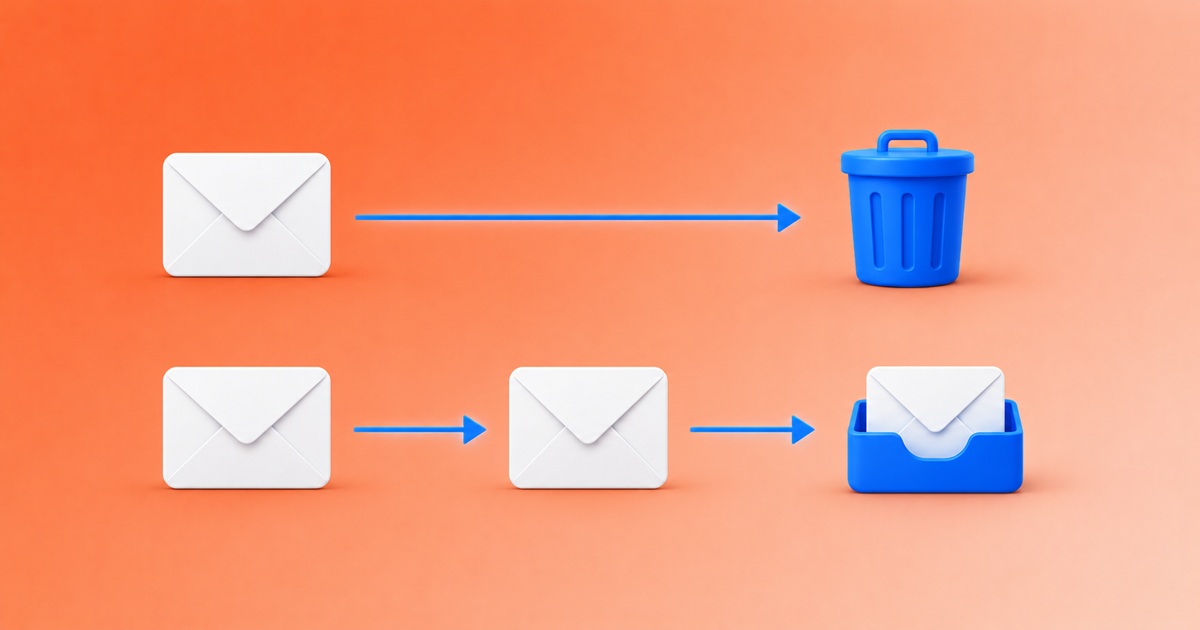
An email generator and a mail-forwarding alias both stand between a sign-up form and your real identity — but they solve opposite halves of the problem. A generator gives you an inbox you throw away; a forwarder gives you a relay you keep. This guide compares the two mechanisms in depth. For how a generator stacks up against second mailboxes and full accounts too, see email generator vs other tools.
Where the mail physically lands
This is the difference everything else follows from.
With a generator, mail is delivered to a mailbox on our server and stays there. You read it in a browser tab. Your real inbox is never involved and never learns the address existed. When you walk away, there is nothing to forward, nothing pointing back at you.
With a forwarder, the alias receives the message and immediately re-sends it to your real inbox. The mail ends up exactly where your normal mail does — same client, same notifications, same search. The alias is a signpost; the destination is still you.
What each service learns about you
A subtle but important privacy gap:
- A generator never knows your real address. There is no destination to forward to — so there is nothing to leak, subpoena, or sell. The link between the throwaway inbox and you exists only in your own head.
- A forwarder must know your real address — that is the whole point; it routes there. So the forwarding provider holds a map of every alias → your real inbox. That map is convenient (one place to manage everything) and also a single point of failure if the provider is breached or compelled.
Can you reply?
A generator is receive-only — there is no compose button and no outbound SMTP, by design. If a conversation needs a reply, the generator is the wrong tool.
A good forwarder supports masked sending: you reply from your real client, the forwarder rewrites the From so the recipient still sees only the alias. Two-way conversation, real identity hidden. That capability alone decides many cases — the moment you need to answer, lean towards forwarding.
How you shut each one off
Generator: you do nothing. Stop opening the inbox and it is recycled after the retention window (see how long do generated emails last). There is no setting to find, no alias to remember.
Forwarder: you disable the specific alias in the provider's dashboard. Mail to it stops reaching you instantly — and you know precisely which vendor was using it. That per-alias kill switch is forwarding's best feature: get spam at alias-shop@… and you have caught the leaker by name.
Side-by-side comparison
| Aspect | Email generator | Mail forwarding |
|---|---|---|
| Where mail lands | Our server, browser tab | Your real inbox |
| Knows your real address? | Never | Always (it routes there) |
| Sign-up required | No | Yes (account at forwarder) |
| Address lifetime | Days, then recycled | As long as you keep it |
| Reply to messages? | No (receive-only) | Yes (masked send) |
| Turn it off by… | Walking away | Disabling the alias |
| Per-sender leak tracing | No — address is shared/recycled | Yes — one alias per vendor |
| Cost | Free | Free tier limited; full features paid |
| Single point of failure | None tied to you | Forwarder holds alias → you map |
The one-line decision
Ask whether the interaction has a future. No future — read once and gone — use a generator. Mail stays off your real inbox entirely, and there is nothing to clean up. Has a future — you will get follow-ups, or need to reply, or want to revoke access later — use a forwarding alias. You keep the relationship while staying able to cut it off per-vendor.
Using both together
They are not rivals; they cover different lifespans. A generator handles the throwaway interactions (downloads, trials, one-off sign-ups); a forwarder handles the keep-but-control ones (subscriptions, orders, recovery contacts). The full three-layer setup — real inbox, forwarding aliases, generated addresses — is laid out in email generator vs other tools, and the safe-usage rules in email generator best practices.